

What Animals Survived After The Mass Extinction In The Mesozoic Era Mesozoic Era
:focal(1142x676:1143x677)/https://tf-cmsv2-smithsonianmag-media.s3.amazonaws.com/filer/36/98/36985e02-182f-4e11-937a-83946bc81d92/lyson11hr.jpg)
In central Colorado, at a identify called Corral Bluffs, there lies an unusual graveyard. The ranks of the dead aren't filled with people, just animals that lived 66 million years ago. Preserved in hardened concretions of rock prevarication the remains of turtles, crocodiles, and most of all, mammals that lived in this place during the first million years after the terrible bear upon that triggered the extinction of the dinosaurs. These animals class a part of our own evolutionary narrative—the story of how mammals went from scurrying around the feet of larger creatures to dominating the continents of the earth, evolving into a diversity of unique beings, including ourselves.
Mammals are not recent additions to the world that came afterward the time of the dinosaurs. The oldest mammals become back much further in time, and opposite to the standard story of shrew-like critters kept in check by monstrous reptiles, mammals thrived during Mesozoic era. The asteroid impact that felled the "terrible lizards" was likewise a portentous result for the mammals that had already been plying their ain success for tens of millions of years.
The mammalian story is a complicated i. Paleontologists still don't entirely hold nearly the identity of the very commencement mammals. Modernistic mammals are easy to spot—they have mammary glands and produce milk, among other traits like fragile inner ear bones and fur. These characteristics are what gives our family the name "mammal." But further back into the fossil record, the merely way to identify a mammal is from bones, teeth and shared anatomical features.
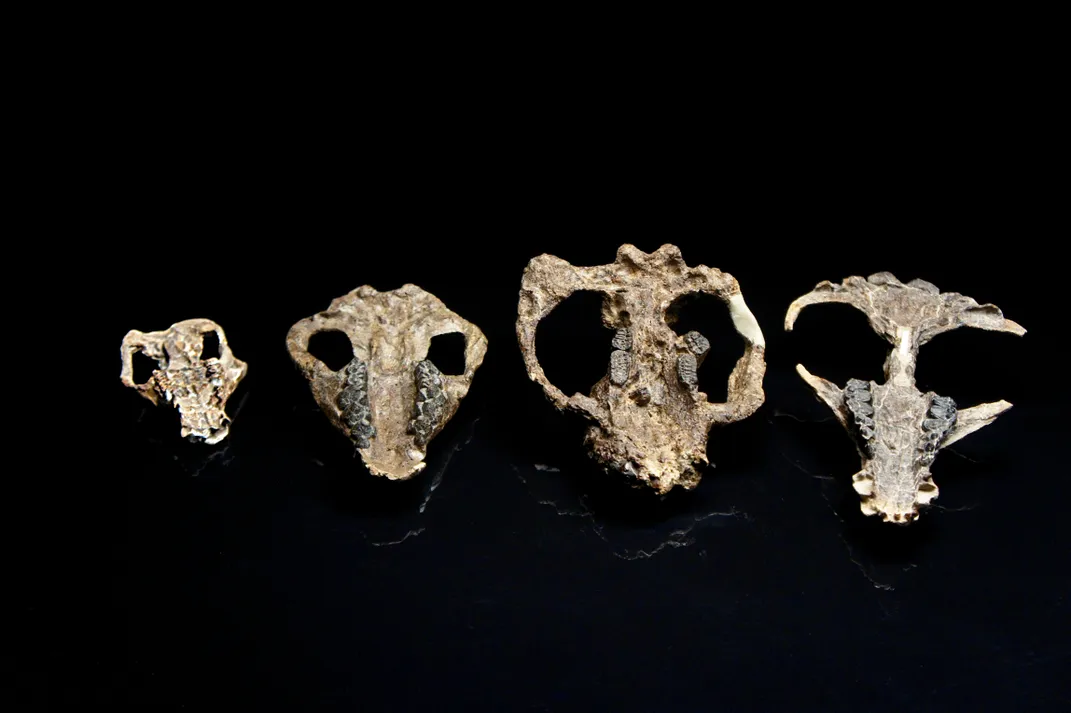
Depending on who yous enquire, mammals can exist regarded as a broad group called mammaliformes that appeared by the Late Triassic—when dinosaurs were but first to diversify themselves—around 220 million years agone. Simply mammaliaformes is a broad group that includes lineages that are totally extinct today. The final common ancestor of all modern mammals lived sometime during the Jurassic, over 160 1000000 years ago. Regardless of what was the earliest mammalian creature, though, animals very closely related to mammals have been around for nearly as long as the dinosaurs, and they underwent an evolutionary explosion during the Mesozoic.
"Frequently people are surprised to hear that mammals were effectually at all in the Mesozoic," a time commonly associated with dinosaurs and other reptiles, says University of Oxford paleontologist Gemma Louise Benevento. And even when mammals are included in studies of the Mesozoic, they are often characterized as small, shrew-like insectivores like the 205 million-year-old Morganucodon from Wales and Communist china. This moving-picture show, Benevento says, primarily comes from 100-year-old research carried out on North American fossil mammals, where the record of tiny teeth and bones ostensibly shows mammals scurrying in the shadows of caves until later on the extinction consequence at the end of the Cretaceous period. But recent discoveries around the world have changed the story, revealing that mammals were thriving alongside the dinosaurs.
Mesozoic beasts came in many forms. Castorocauda was the Jurassic equivalent of a beaver, consummate with a scaly, flattened tail. Volaticotherium, from about the aforementioned time, resembled a flying squirrel. Fruitafossor, by contrast, was like a Jurassic aardvark, with powerful limbs that appear well-suited to tearing open up termite nests. And the badger-sized Repenomamus was an omnivore that, thank you to fossil tummy contents, we know ate baby dinosaurs. Every year a few more mammal ancestors are added to the list.
And then, one day 66 million years agone, a catastrophic asteroid impact triggered a devastating mass extinction that killed off nearly all dinosaurs—leaving only birds—and reshuffled the evolutionary deck for mammals. The effect is often interpreted as a stroke of cosmic luck that allowed mammals to step out of the shadow of the reptiles and expand in size, shape, behavior and habitat. Simply equally paleontologists continue to dig into the critical time afterward the bear on, the story is becoming more complex. The rising of the mammals was not necessarily assured, and recovery from the disaster took far longer than expected.
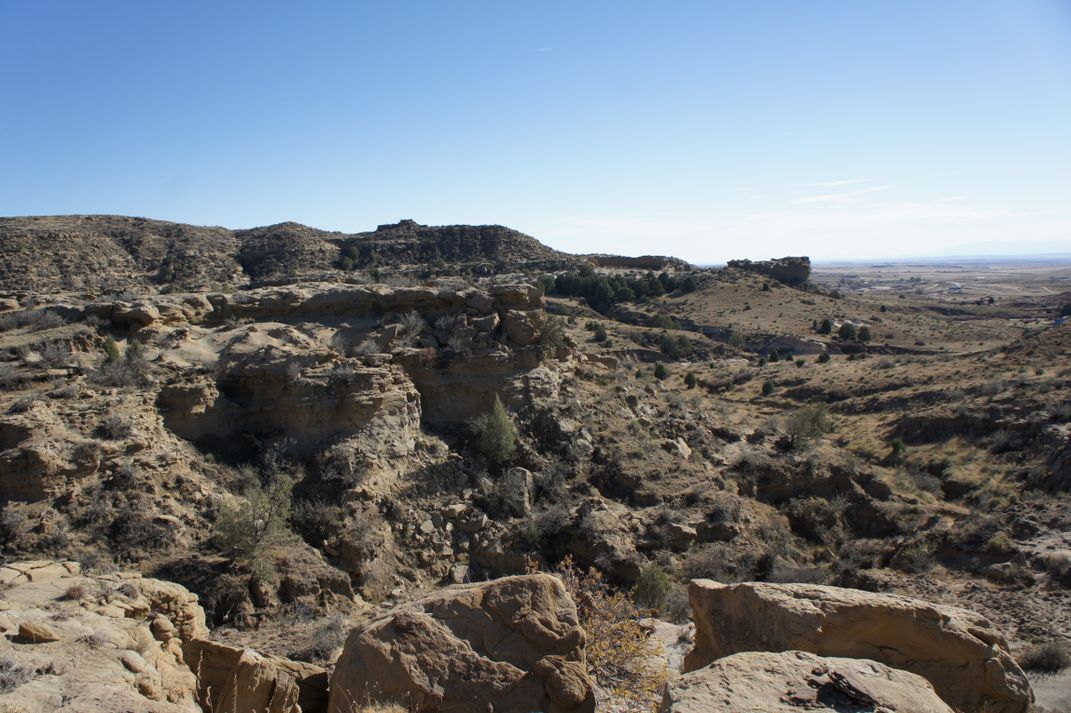
The fossils of Corral Bluffs are office of that story. Described by Denver Museum of Nature and Science paleontologist Tyler Lyson and colleagues, the stacks of fossils and stone in this pocket of Colorado document approximately the first million years of the Paleocene, the time menstruation direct post-obit the Cretaceous later the mass extinction. Correlating the mammal fossils to others from the site and a carefully calibrated timescale, the research squad was able to come upward with a rough timeline of how mammalian beasts transformed in a world where the likes of Tyrannosaurus no longer roamed.
Mammals did non emerge from the extinction issue unscathed. Before the asteroid strike, Lyson says, the largest mammals were about the size of a raccoon. Immediately after, the biggest mammals were about rat-sized. But in a earth without towering dinosaurs, new opportunities opened for mammals.
"Within 100,000 years after the extinction, nosotros take a different type of raccoon-size mammals," Lyson says, with additional fossils from Corral Bluffs revealing an increment size over time. By the 300,000-year mark, the biggest mammals were virtually the size of large beavers, and those that lived 700,000 years after the bear upon could weigh over a hundred pounds, such as Ectoconus ditrigonus, a herbivore dissimilar whatever mammal alive today. "This is a hundred-fold increase in torso size compared to the mammals that survived the extinction," Lyson says. Mammals wouldn't go through this sort of rapid growth once more for another thirty one thousand thousand years.
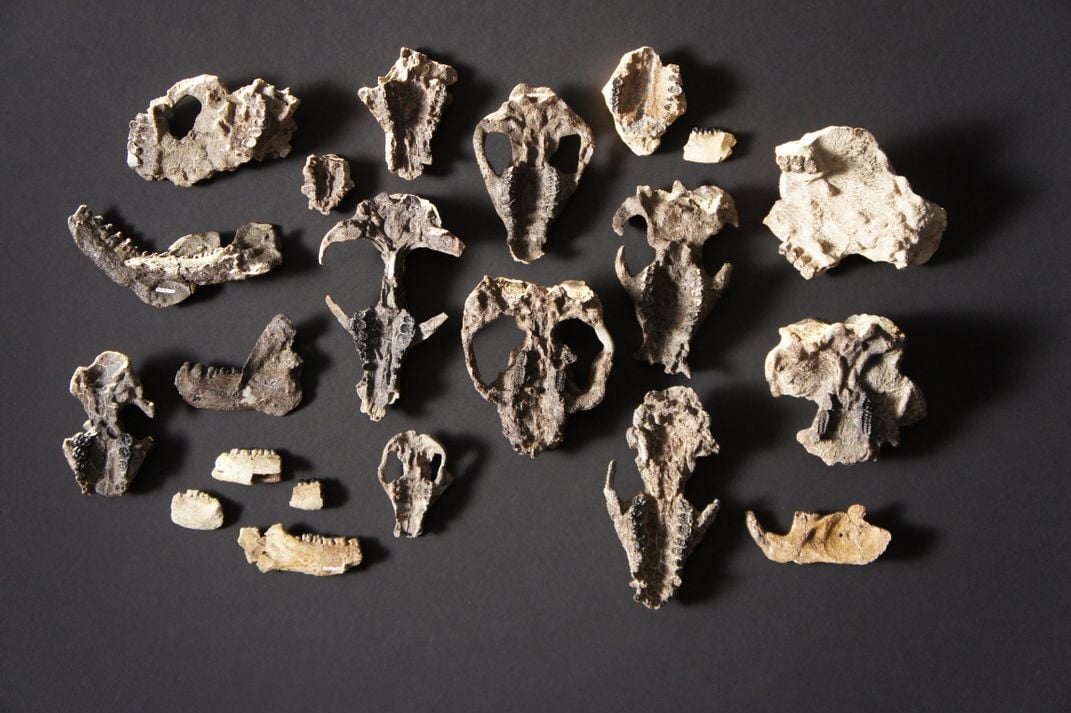
The question facing paleontologists is what spurred this rapid growth. A combination of factors were likely at play. Not only did the dinosaurs that munched mammals disappear, only a warming global climate inverse the makeup of forests and allowed for the evolution of new plants. Legumes—energy-rich plants and the ancestors of bean—evolved for the beginning time. The botanical changes may accept helped provide the fuel for mammalian growth, Lyson says, with climate, plants and mammals all tied together in a story of recovery from ane of the world's most devastating mass extinctions.
"For the first time, we are able to link changes in plants and animals together, and more importantly, we are able to place all of these changes in a high-resolution temporal framework," Lyson says.
Despite the relief of living in a world without rapacious dinosaurs, mammals took time to expand into the wildly varied family of beasts that diversified throughout the Cenozoic, from herbivorous "thunder beasts" to saber-toothed cats to walking whales.
Earlier this yr, Benevento and colleagues published a report looking at mammal jaws from the Mesozoic and into the following Cenozoic era. The researchers were interested in the different shapes that mammal jaws took as related to diet. What they institute was that mammal jaw disparity—and therefore the variety of herbivores, carnivores, omnivores and insectivores—rose sharply during the Mesozoic, before the impact.
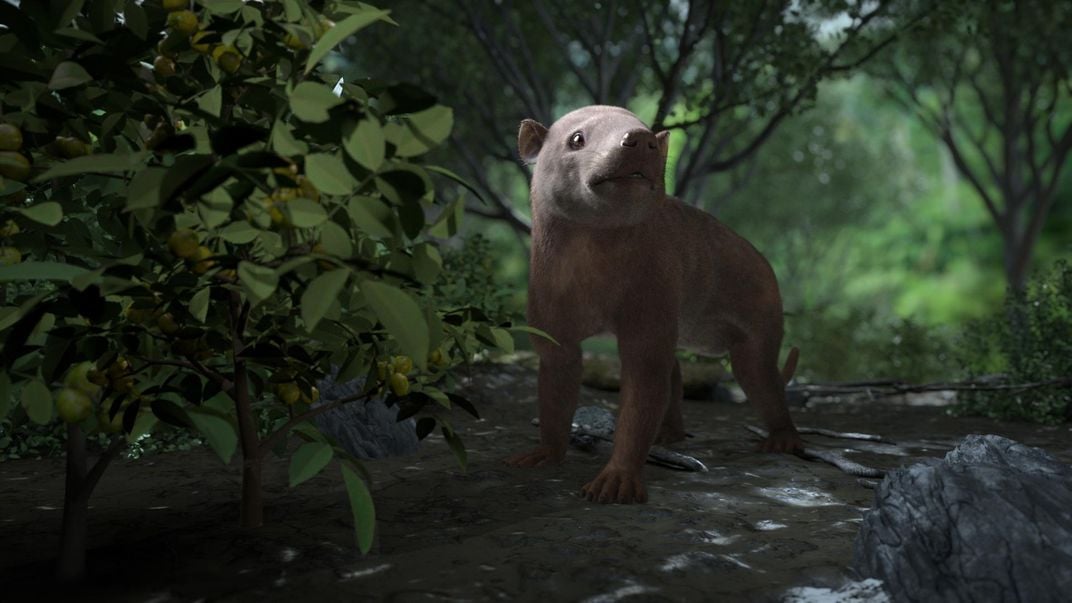
But the extinction changed mammalian luck. Even though the variety of jaw shapes stayed the same through the extinction issue, Benevento says, unlike mammals rose while the old varieties died off. The extinction was terrible for the more archaic mammals just a benefaction to our afar relatives and ancestors, allowing more modernistic mammals to take upwardly the ecological roles previously filled by other species. "Between the Cretaceous and Paleocene, nosotros have an extinction and turnover of mammals with one group decreasing and the other increasing," Benevento says.
The rise of mammals took time. Information technology wasn't until the Eocene, more than 10 million years after the impact, that mammals became truly large and evolved into an array of beasts to rival the dinosaurs.
"There are no known mammals filling the big grazer niche in the Mesozoic," Benevento says, and it took nearly 10 one thousand thousand years for herbivorous mammals to abound big enough resemble today'due south bison and antelope. Information technology'south piece of cake to have the evolutionary success of mammals as a foregone conclusion, especially given that we're a part of the family, but new fossils are simply only now revealing the deep and tangled roots of our own evolutionary tree.
Source: https://www.smithsonianmag.com/science-nature/fossil-site-reveals-how-mammals-thrived-after-death-of-dinosaurs-180973404/
Posted by: stewardexcums.blogspot.com
0 Response to "What Animals Survived After The Mass Extinction In The Mesozoic Era Mesozoic Era"
Post a Comment